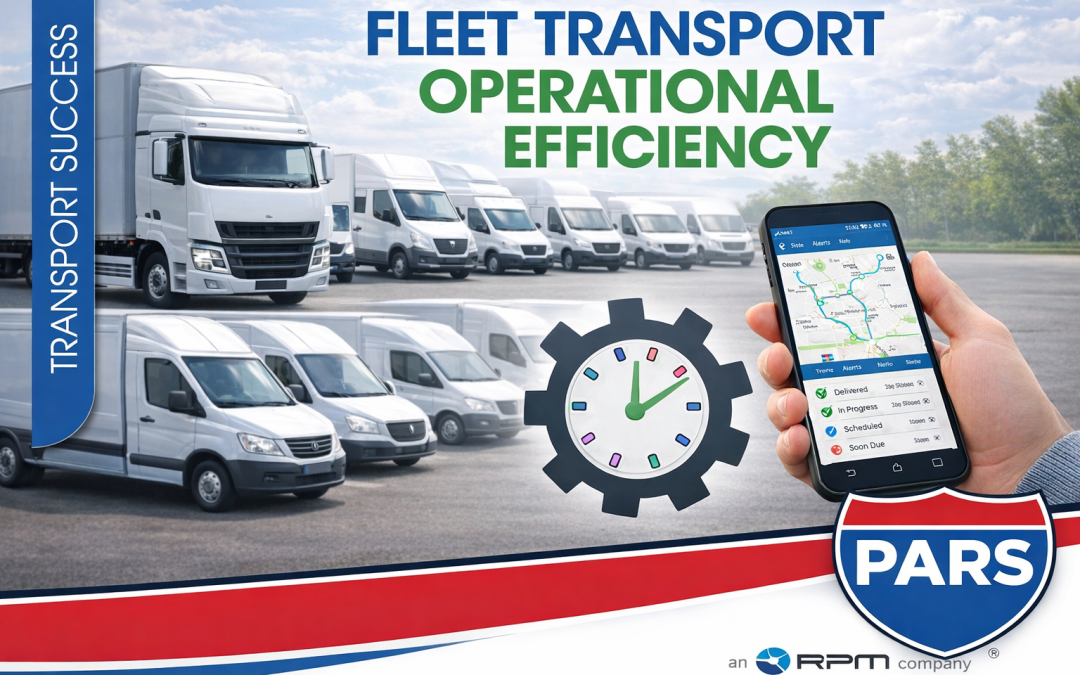
Fleet management companies (FMCs) face escalating pressure to deliver more — including increased transparency, faster service, better cost control, and higher client satisfaction — while handling increasingly complex vehicle lifecycles.
As fleet programs grow to include various vehicle types, electrification, and deployment across multiple locations, the ability to move vehicles efficiently, compliantly, and thoughtfully has become a key element of service delivery. More FMCs are building stronger relationships with specialized fleet logistics partners to manage these complexities. What was once seen as a basic service — moving vehicles from point A to point B — is now a strategic capability that directly impacts client satisfaction, operational success, and program growth.
For transport providers like PARS, joining a larger logistics organization such as RPM Logistics has further enhanced the ability to deliver value throughout the vehicle’s lifecycle.
Expanding FMC Capabilities Through Integrated Transport Logistics
Fleet transport partners offer the scale and expertise FMCs need to oversee vehicle movement throughout the entire lifecycle—from initial delivery and upfitting to reassignment, storage, and remarketing.
By integrating carrier transport, driveaway services, and storage solutions into a coordinated logistics system, transport partners assist FMCs:
• Execute complex logistics under strict policy and SLA requirements
• Maintain service consistency across regions and vehicle types
• Scale operations without expanding internal resources
In practice, transport becomes an extension of the FMC’s managed services platform — providing reliability, compliance, and operational efficiency across every client program.
Being part of a larger relocation and logistics organization also offers access to expanded resources, broader operational expertise, and deeper process integration. This increased scale helps transport providers support FMC clients as fleet programs grow in size and complexity.
Turning Visibility into Confidence
Fleet clients are increasingly demanding real-time updates, transparent data, and proactive communication during the vehicle relocation process.
Advanced transport management platforms now make it possible to:
• Provide real-time tracking, automated status updates, and digital proof-of-delivery
• Share performance dashboards and exception alerts with FMC teams
• Generate operational insights that highlight bottlenecks and improvement opportunities
This level of visibility boosts confidence — for both the FMC and the end client — that vehicle movements align with business timelines and operational priorities.
Reinforcing the FMC–Vendor Relationship
A genuine transportation partnership extends beyond simple transactions. It demands alignment with the FMC’s operational standards, customer expectations, and brand reputation.
That means:
• Delivering service that reflects the FMC’s quality standards
• Resolving issues proactively before they escalate
• Participating in joint performance reviews and continuous improvement initiatives
When executed effectively, the relationship becomes collaborative instead of transactional, fostering shared responsibility for performance and long-term client success.
Recent customer feedback shows the effect this kind of alignment can have. In one large FMC client program, post-transport surveys recorded a 140% rise in customers rating their experience as “extremely satisfied.” Improvements like this show how operational coordination between FMCs and their transport partners can directly improve the end-user experience.
Greater FMC Client Value
For fleet operators — the FMC’s end clients — the quality of the FMC–transport provider relationship directly affects business performance. When the two work closely together, the fleet benefits from:
- Faster cycle times allow for more predictable vehicle deliveries, redeployments, and remarketing, reducing downtime and enhancing utilization.
- Enhanced communication and data sharing between transport and FMC systems decreases blind spots and allows fleet managers to plan confidently.
- Higher reliability. Coordinated escalation procedures and aligned service-level expectations ensure issues are addressed quickly before disrupting operations.
- Better cost control. Optimized routing, consolidated shipments, and transparent reporting help fleets maintain predictable budgets while identifying cost-saving opportunities.
What Fleet Managers Should Look For
Fleet decision-makers evaluating FMC partners—and the logistics networks behind them—should consider several key attributes:
• Integrated technology platforms connecting order creation, tracking, and reporting
• Proactive communication that identifies issues early
• Clear accountability structures with defined SLAs
• Demonstrated capacity across vehicle types, classes, and regions
• A commitment to continuous improvement supported by shared analytics and performance reviews
Once these elements are in place, fleet managers not only achieve operational efficiency but also feel confident that their vehicles — and their business goals — are supported by a cohesive logistics ecosystem.
Driving Financial and Operational Efficiency
Strategic transport partnerships also lower overall fleet lifecycle expenses through improved planning and coordination.
Through optimized routing, scheduling, and resource allocation, FMCs can:
• Reduce vehicle downtime and transportation expenses
• Align moves with upfitting, delivery, and remarketing timelines
• Simplify billing, reporting, and performance measurement
These efficiencies turn logistics from a background task into a quantifiable boost to program ROI.
Building the Future of Fleet Together
As fleets advance toward electrification, connected vehicle technologies, and more agile deployment models, FMCs will increasingly depend on logistics partners that provide scalability, innovation, and operational expertise.
Transport providers that combine specialized fleet expertise with the resources of larger logistics organizations are especially well positioned to support these changes. By providing integrated logistics, real-time visibility, and reliable service performance, these partnerships allow FMCs to concentrate on their core mission — strategic fleet management — while ensuring every vehicle move aligns with the client’s broader business goals.
Fleet management continues to develop quickly. The FMCs that turn their transport partnerships from simple transactions into strategic collaborations will be best positioned to lead the next stage of fleet excellence — where logistics, data, and service quality advance together.